App Store Optimization, or ASO, is the work of making your app visible in App Store and Google Play search and turning more store visits into installs. For a US business with an app, the short answer is this: research keywords in the US storefront, fix the metadata fields each store actually indexes, improve the icon and screenshots that decide the tap, and earn fresh ratings. Hire an agency only when you can check its work in your own store accounts and it reports on installs and conversion, not on rankings alone.
What ASO actually covers
ASO has two jobs. The first is discovery: helping the stores match your app to the searches your customers type. The second is conversion: persuading a person who sees your listing to tap Install. A top ranking with a weak icon, a vague first screenshot, and a low rating still loses downloads to a lower ranked app with a stronger listing.
Apple states that App Store search results depend on text relevance, including matches for the app title, subtitle, keywords, and primary category, as well as user behavior such as downloads, ratings, and reviews. (Apple Developer) Google Play works differently.
Apple App Store: 160 characters decide discovery
On the App Store, only a small set of fields feeds search. Apple documents the limits in its product page guide: the app name up to 30 characters, the subtitle up to 30 characters, and the keyword field up to 100 characters, with terms separated by commas and no spaces. (Apple Developer) The description is not indexed for search on iOS, so it is a conversion tool, not a ranking tool.
That gives you 160 searchable characters per language. Put the primary keyword in the app name, naturally combined with the brand, for example "Brand: Habit Tracker". Use the subtitle for a second keyword plus the core benefit. Use the keyword field for terms you have not used elsewhere, and do not repeat words from the name, subtitle, or category.
Google Play: the full description counts
Google Play has no hidden keyword field: Google learns what your app is about from the title, the short description, and the full description. Google Play Console Help states the limits: the app title 30 characters or less, the short description 80 characters or less, and the full description 4,000 characters. (Google Play Console Help)
The same help page warns against tactics that get listings rejected: excessive repetition of words, ranking claims such as "best" or "number one", and text that does not describe what the app does. Write the full description in natural sentences and open with who the app is for and the problem it solves.
Visuals and ratings decide the tap
In search results, a person sees the icon, the first screenshot, and the rating before the name or description. The icon must read clearly at a small size, with one simple idea and strong contrast. The first screenshot is the hero: it must show the core benefit in one glance, not a login screen. Each following screenshot should answer one buyer question: what it does, how it looks in use, and why it is better.
Test visuals instead of debating them. Apple offers Product Page Optimization and Google Play offers store listing experiments: change one element at a time, collect enough traffic to read the result, and keep the winner.
Ratings work the same way. Apple names the number and quality of ratings as a search factor, and on both stores a low rating kills conversion before a person reads a word. Most teams aim for 4.0 stars or higher, and recent positive ratings matter more than an old reputation. Ask for reviews right after a person completes something valuable in the app. Never buy reviews or run incentivized installs: both Apple and Google prohibit them.
Should you hire an ASO agency or do it in house
Hire outside help when ASO is critical to growth and no one on your team has senior ASO experience. Keep the work in house with tooling when you have an internal owner who can act on the research every week, because ASO is a loop of research, change, test, and measure, not a one time setup. A one off audit is a good middle step: it tells you what to fix first, without a long contract.
Judge every provider on the same checklist: proof (published case work in your category, with numbers you can check), process (keyword research in the US storefront and each language you care about, plus a plan for testing creatives), policy (a written statement that they never buy reviews or installs), people (the name and experience of the person running your account), and reporting (a sample report covering impressions, product page views, conversion rate, first time downloads, and keyword movement, with a baseline agreed in the first two weeks).
Be wary of any provider that promises a number one ranking or a guaranteed timeline: no agency controls Apple or Google. On price, ask for a written quote that names exactly what is included, with dates. Retainers vary widely across the market, so compare written scopes rather than headline figures.
Measure installs, not rankings
Rankings alone are a weak measure of ASO: a keyword can climb while installs stay flat if the listing does not convert. Report on the full funnel instead: impressions, product page views, conversion rate, first time downloads, and retention of organic users.
Check the work in your own accounts: App Store Connect shows where visitors come from and how many install, and Google Play Console shows store performance by source. Agree on a baseline before the work starts, and allow about 90 days for meaningful movement: metadata changes need a review cycle, tests need traffic, and ratings build week by week.
ASO also connects to the wider search picture: people increasingly ask AI assistants which app to install before they open a store. Google advises that clear, factual, well organized content is what its systems can surface in AI features. (Google Search Central) For US businesses that want search, AI answers, and store visibility handled as one strategy, our SEO, AEO, and GEO services for US businesses cover all three.
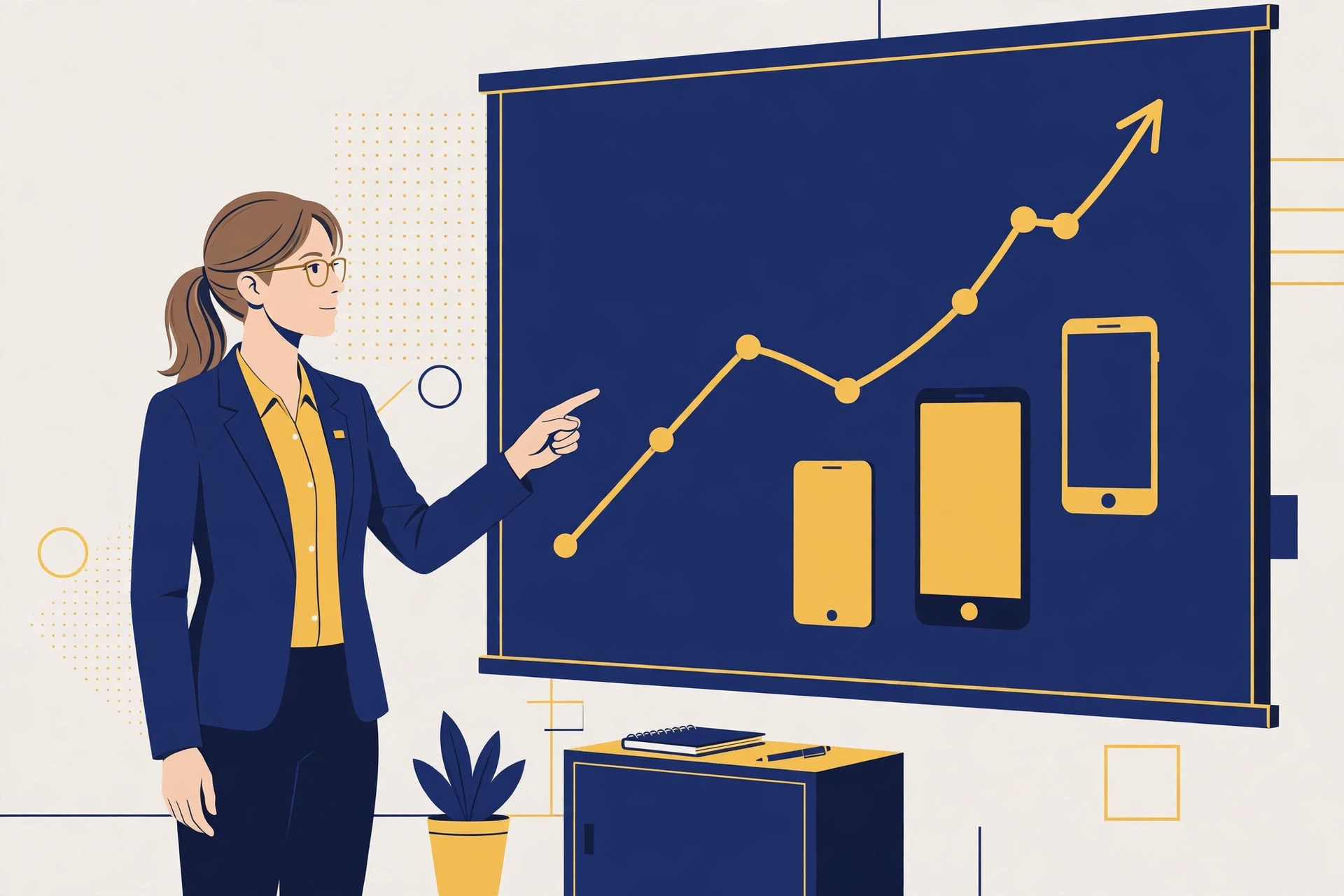
Rankings alone are a weak measure of ASO: a keyword can climb while installs stay flat if the listing does not convert.
— The core principle of App Store Optimization
Frequently Asked Questions
What is App Store Optimization?
App Store Optimization is the work of improving your app listing so it appears for the right searches in the App Store and Google Play and turns more store visits into installs.
How is ASO different from SEO?
SEO improves a website so search engines rank it, while ASO improves a store listing so Apple and Google surface the app for the right queries. ASO is judged on installs and conversion in the stores, not on website traffic.
How long does ASO take to show results?
Metadata changes need a store review cycle, creative tests need enough traffic to read, and ratings build over weeks. Most apps see meaningful movement within about 90 days of steady work, while small fixes such as a clearer first screenshot can lift conversion sooner.
Do I need an ASO agency to grow app installs?
Not always. A team with an internal owner and good tooling can run ASO in house. An agency makes sense when ASO is critical to growth and no one in house has senior ASO experience.
What should I check before hiring an ASO provider?
Ask for published case work in your category, a written process for keyword research and creative testing, a written promise never to buy reviews or installs, the name of the person running your account, a sample report, and a written quote naming every deliverable and date.